
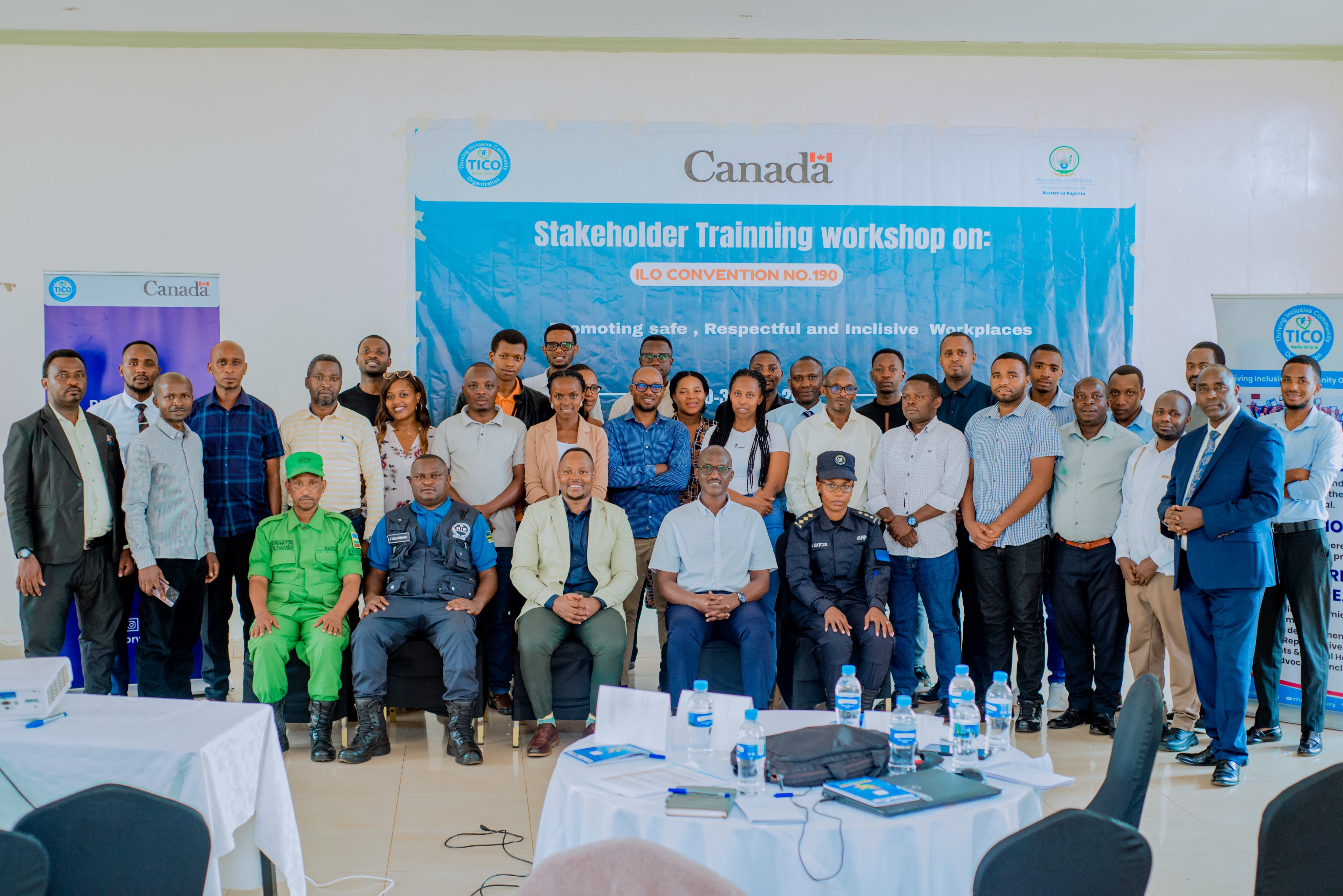
Today, 31 July 2026, in Kayonza District, Thriving Inclusive Community Organization (TICO Rwanda), with generous support from the Government of Canada through the Canada Fund for Local Initiatives (CFLI), has successfully concluded a two-day stakeholder training workshop on ILO Convention No. 190, reaffirming its commitment to promoting safe, respectful, and violence-free workplaces across Rwanda.
The workshop brought together a diverse group of stakeholders, including district leadership, labour inspectors, employers, human resource professionals, managing directors, security organs, civil society organizations, youth representatives, the Private Sector Federation (PSF), the National Council of Persons with Disabilities (NCPD), the National Youth Council (NYC), public mass mobilizers, and district youth coordinators. Their participation reflected a shared commitment to advancing decent work and strengthening collaboration in addressing violence and harassment in the world of work.
The workshop was officially opened by the Acting Vice Mayor of Kayonza District, Mr. Higiro Julius, who reaffirmed the district's commitment to promoting workplaces that are safe, respectful, and inclusive.
In his opening remarks, he emphasized that every worker deserves to be treated with fairness and dignity regardless of their background or profession. He encouraged participants to move beyond theory by applying the knowledge gained during the training within their respective institutions and communities.
His remarks underscored the importance of local leadership in ensuring that workplace rights are protected and that violence and harassment are prevented through collective responsibility.
The initiative was organized as part of TICO's ongoing efforts to support the implementation of ILO Convention No. 190, the first international labour standard that specifically recognizes everyone's right to a world of work free from violence and harassment.
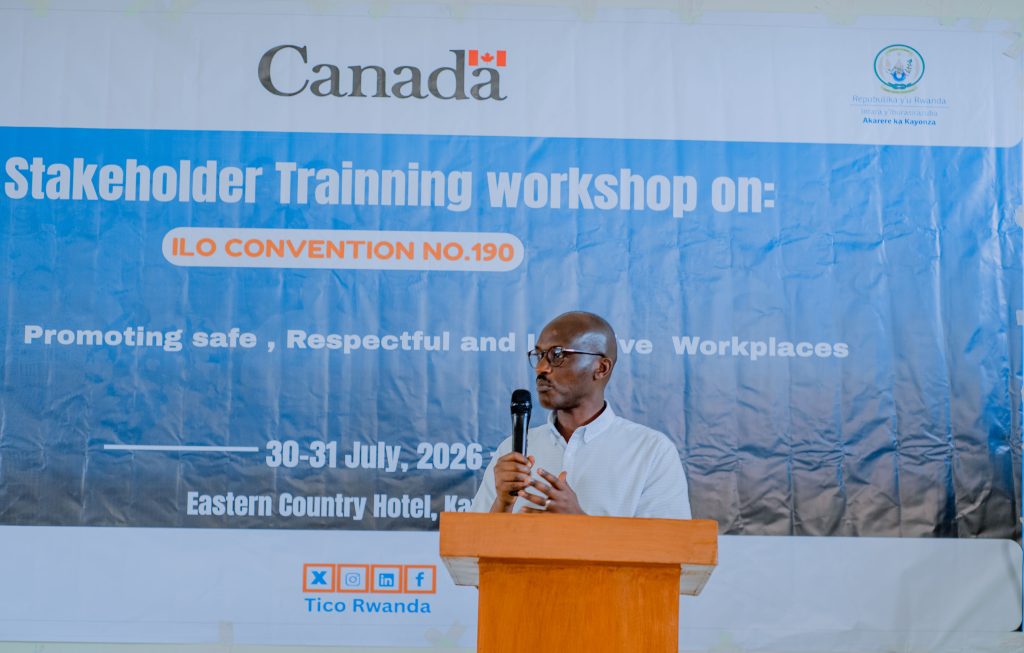
Addressing participants during the opening session, TICO Executive Director, Egide, reminded stakeholders that creating respectful workplaces begins with recognizing the dignity of every individual.
"Every person has the right to work in a place where they feel safe, respected, and valued."
His message set the tone for the workshop, encouraging participants to embrace dialogue, collaboration, and shared responsibility in creating work environments where everyone can thrive without fear of violence or harassment.
The sessions focused not only on legal obligations under ILO Convention No. 190 but also on practical actions organizations can take to build positive workplace cultures founded on equality, respect, and inclusion.
Throughout the two-day workshop, participants explored the principles of the Convention while examining practical strategies for preventing workplace violence, strengthening reporting and response mechanisms, and fostering inclusive organizational cultures where every individual is treated with dignity and respect.
The training also created an important platform for dialogue among stakeholders from different sectors, encouraging knowledge sharing and coordinated action toward safer workplaces across Rwanda.
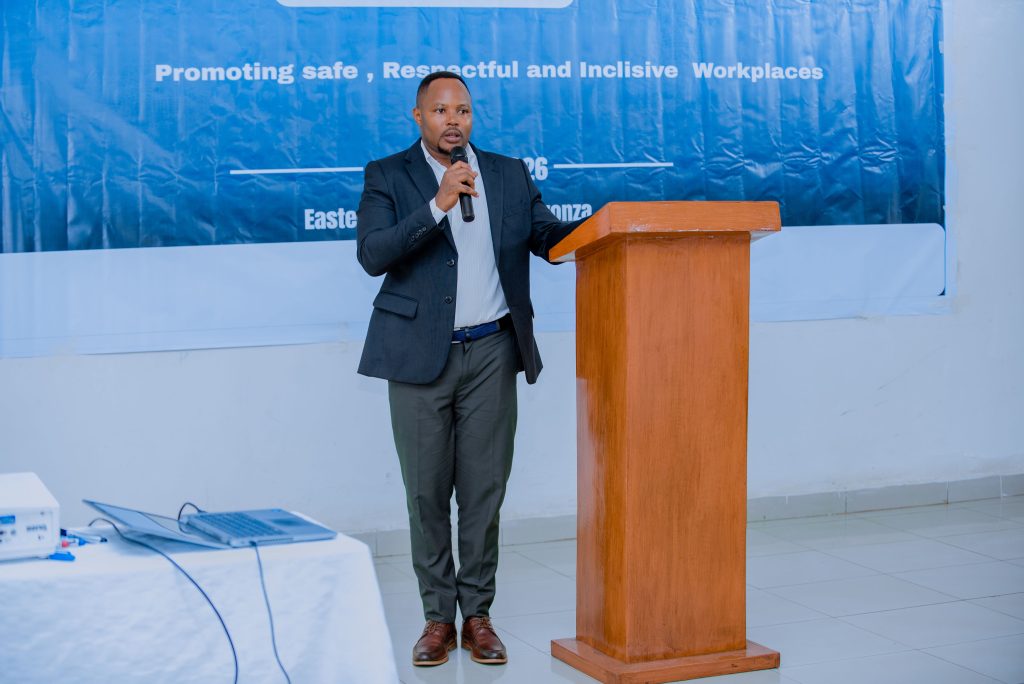
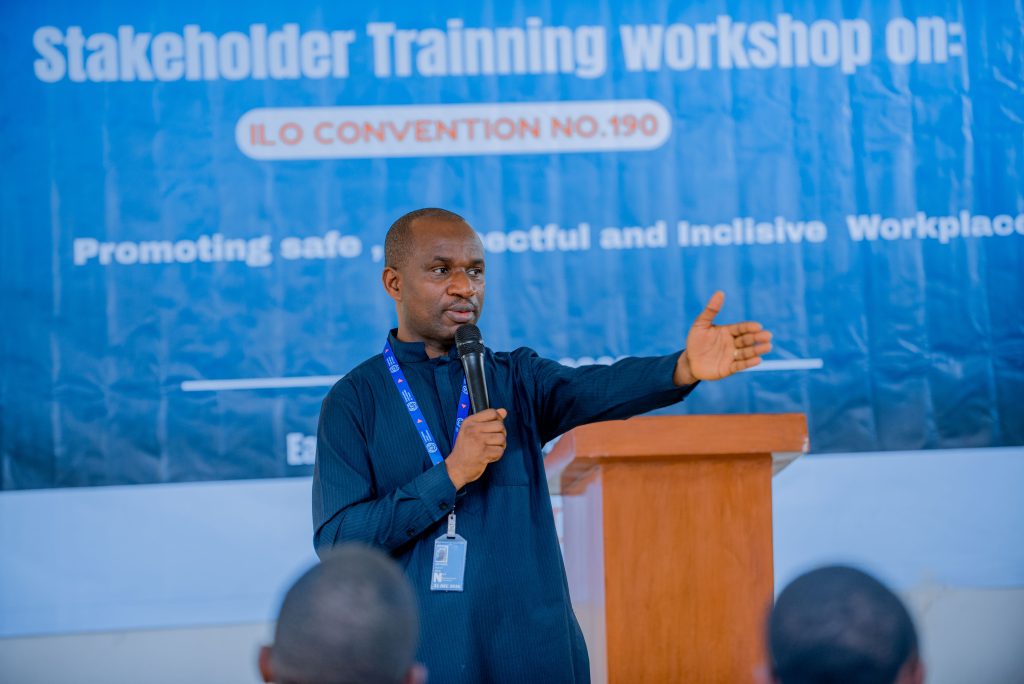
The second day of the workshop featured a technical session facilitated by Innocent Uwitonze, National Programme Coordinator for Building Social Protection Floors for All at the International Labour Organization (ILO).
His presentation strengthened participants' understanding of Rwanda's progress toward implementing ILO Convention No. 190 and highlighted practical approaches to preventing workplace violence and harassment while promoting decent work for all.
Participants explored the responsibilities of employers, employees, government institutions, and other stakeholders in creating safer working environments. Discussions also focused on strengthening reporting mechanisms and ensuring that workplaces respond effectively whenever incidents of violence or harassment occur. The collaboration between TICO and the ILO demonstrates a shared commitment to supporting Rwanda's efforts toward workplaces where dignity and respect become the standard rather than the exception.
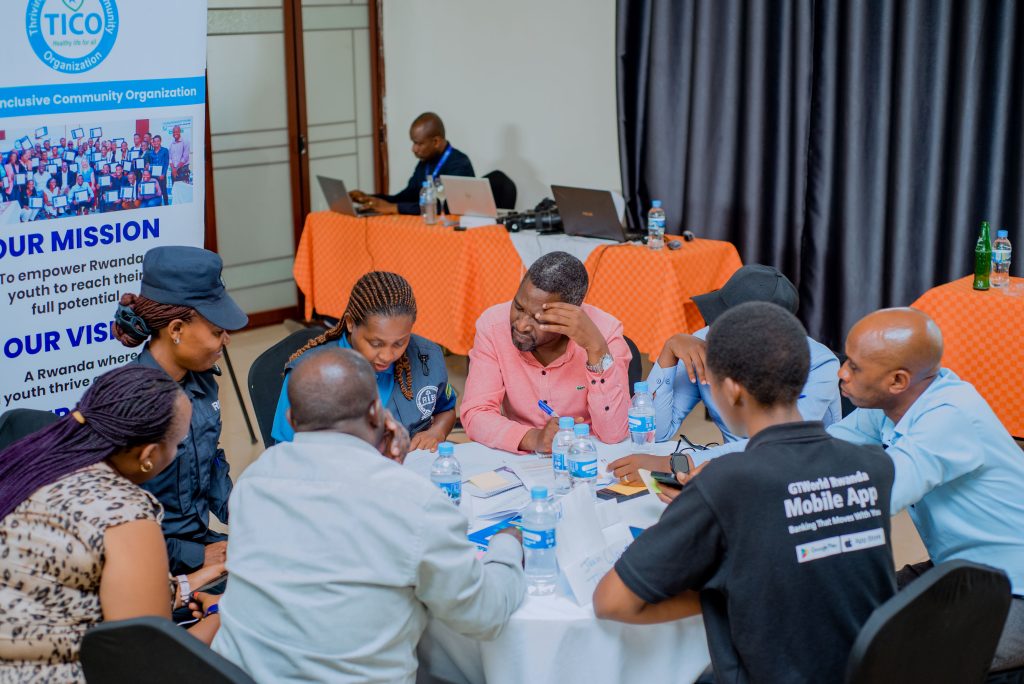
One of the workshop's highlights was the use of the Jigsaw Technique, an innovative and highly participatory learning approach that encouraged stakeholders to work together in solving real workplace challenges.
Rather than relying solely on presentations, participants analyzed real-life workplace scenarios involving violence and harassment. Working in small groups, they shared experiences, discussed challenges faced in different sectors, and jointly developed practical solutions that can be implemented within their organizations.
The interactive methodology promoted peer learning and enabled participants to benefit from diverse perspectives while strengthening collaboration across institutions. The enthusiasm and engagement demonstrated throughout the exercise reflected the value of participatory learning in building lasting knowledge and inspiring meaningful action.
The workshop emphasized that preventing workplace violence requires coordinated action from all sectors and that every institution has a role to play in ensuring safe and equitable working environments.
As the workshop concluded, TICO expressed its sincere appreciation to Kayonza District leadership, facilitators, development partners, and all participants for their commitment to advancing workplace safety and dignity.
The organization emphasized that the training represented far more than a capacity-building exercise—it marked a collective commitment to transforming awareness into concrete action.
By equipping stakeholders with practical knowledge and fostering collaboration across sectors, the workshop contributes to Rwanda's broader efforts to implement international labour standards while promoting workplaces where every person can work free from violence, harassment, and discrimination.
With continued partnership and shared responsibility, initiatives like this are helping build a future where respect, equality, dignity, and safety define every workplace in Rwanda.